Auto Shop Labor Rate Calculator: What Mechanics Charge per Hour and How to Set Your Rate
Set your auto shop labor rate from technician wages, burden, overhead and target profit, then check your effective labor rate against the posted door rate and typical shop rates.
Key takeaways
- The shop door rate is not the same thing as technician pay, and it is not the same as effective labor rate.
- A solid planning formula is: loaded technician cost plus overhead per billed hour, then divide by one minus the target labor profit margin.
- Example: a $30 wage, 30 percent burden, $12,000 in monthly overhead, two technicians at 75 percent efficiency and a 30 percent profit target points to about $127 per hour.
- Effective labor rate is labor sales divided by billed hours. If it sits well below the posted rate, discounts or unbilled time are leaking money.
- Raising efficiency, not just the posted rate, is often the faster way to a healthier labor rate, which is why bay time and the right equipment matter.
The number on the shop wall is not technician pay, and it is not automatically what the shop actually collects. It is the door rate: the hourly labor figure you post, quote and print on the repair order. Get it wrong and you either leave money on the table or price yourself out of the market. Get it right and the rate covers wages, burden, overhead and a profit target, even on an ordinary week.
Enter your costs and target margin in the calculator below to get a recommended shop labor rate. Switch to effective labor rate to see what you actually collected per billed hour. Under the tool you will find the formula, a typical rate chart, and the difference between technician wages, the posted door rate and effective labor rate.
Auto shop labor rate calculator
The two technician example from this guide is filled in. Replace it with your own numbers. Results update as you type.
Post a door rate of about $127 per hour
$89.00 cost per billed hour / 0.70 = $127.14, rounded to the nearest dollar
- Loaded technician cost $39.00 per hour ($30.00 x 1.30)
- Available hours 320 per month (2 technicians x 160 hours)
- Expected billed hours 240 per month at 75 percent efficiency
- Overhead per billed hour $50.00 ($12,000.00 / 240)
- Cost per billed hour $89.00
- Labor gross profit at $127 $38.00 per billed hour, about $9,120.00 per month
Shop equipment that protects billed hours
Want help matching lifts or tire equipment to your bays? Send us a note
Estimates for planning only. Check local market rates and your own books before you change a posted shop rate.
How to set a shop labor rate in 5 steps
- Start with technician pay. Use the hourly wage you pay a producing technician, not what you hope to charge.
- Add burden. Payroll taxes, workers compensation and benefits usually add about 20 to 40 percent on top of wages. A 30 percent burden is a reasonable planning default.
- Spread monthly overhead across billed hours. Rent, utilities, insurance, shop supplies, software and non producing staff have to be paid from the hours you actually bill, not the hours the shop is merely open.
- Use a realistic efficiency number. Efficiency is billed hours divided by available hours. Many shops land between 70 and 85 percent. A 100 percent figure is almost never real.
- Add a profit target and post a clean number. Divide the full cost per billed hour by one minus the target labor profit margin, then post a whole dollar rate you can defend.
The shop labor rate formula
The calculator uses this planning formula:
Loaded technician cost = wage x (1 + burden percent)
Billed hours = technicians x available hours per technician x efficiency percent
Overhead per billed hour = monthly overhead divided by billed hours
Cost per billed hour = loaded technician cost + overhead per billed hour
Recommended door rate = cost per billed hour divided by (1 minus the target profit margin)
Example: two technicians paid $30 per hour, a 30 percent burden, $12,000 in monthly overhead, 160 available hours each and 75 percent efficiency. Loaded cost is $39 per hour. Expected billed hours are 240. Overhead is $50 per billed hour. Full cost is $89. With a 30 percent profit target, $89 divided by 0.70 is about $127 per hour. That is the number the calculator posts for this example, rounded to the nearest dollar.
This method already folds shop overhead into the cost, so the profit target is a margin on that full cost. A 20 to 35 percent target is a practical planning range here. Do not drop a 60 or 70 percent dealership labor gross profit target on top of a fully loaded cost, or the rate will jump far past what most independent shops can post.
Wage, door rate and effective labor rate
Three different numbers get called a labor rate, and mixing them up is why a lot of advice on this topic looks contradictory.
- Technician wage is what you pay the person turning the wrenches. Job boards and wage surveys answer this question. It is not the shop rate.
- Door rate is the posted shop labor rate on the wall and on the estimate. This is what customers mean when they ask how much a mechanic charges per hour, and it is the number the first part of the calculator sets.
- Effective labor rate (ELR) is labor sales divided by billed hours. It is the amount you actually collected for each hour you billed, after discounts, coupons, warranty rates, employee work and write offs.
A shop can post $140 and still run an ELR of $120. The posted rate is not the problem in that case. The leak is in billing, discounting or comebacks. Track both numbers every month.
Typical auto shop labor rates
There is no single official US average, and rates move with the local market, the work mix and the shop type. Treat the ranges below as planning context, not a price list. Consumer guides in 2026 often describe a common posted band of about $120 to $159 per hour. Shop management surveys in the same period have put a typical national posted rate in the low $130s, with a wide spread by state. The cheapest markets can sit well under $100. High cost coastal and metro markets, and many dealerships, run much higher.
| Shop type | Typical posted rate | What usually drives it |
|---|---|---|
| Independent mechanical shop | $100 to $175 | Most shops cluster in the $120 to $160 band |
| Dealership | $150 to $250 or more | Higher overhead, OEM work and luxury makes push the top end up |
| Mobile mechanic | $80 to $150 | Lower building overhead; travel time still has to be in the rate or a trip fee |
| Diesel or heavy duty | $150 to $250 or more | Costlier tooling, insurance and training |
| Auto body, body and paint | Often below the mechanical rate | Body and paint rates are frequently posted separately from mechanical or frame rates |
State averages exist in shop management and insurance surveys, but they go stale quickly and they hide a wide spread inside each state. A rural independent and a metro dealer in the same state are not in the same market. Use a national or regional band to check that you are not an outlier, then set the rate from your own costs and from what nearby shops of the same type actually post.
Billed hours, clocked hours, flag hours and efficiency
The rate only works if the hours going into the formula are real.
- Available or clocked hours are the hours a technician is paid to be at the shop.
- Billed or flag hours are the hours you actually put on the repair order, often from a labor time guide such as ALLDATA or Mitchell rather than from the clock.
- Efficiency is billed hours divided by available hours. If a technician is paid for 160 hours and you bill 120, efficiency is 75 percent.
Labor time guides tell you how many hours a job should take, not what to charge for each of those hours. That is a different question from the door rate, and a reason this page does not try to be a labor time guide.
Flat rate and hourly pay also get mixed into this discussion. Flat rate pays the technician on booked hours. Hourly pay pays on the clock. Either system can support a healthy shop rate, but only if you still measure billed hours, ELR and comebacks. A shop that is slow to get a car in the air, or that repeats work, will see ELR fall no matter how the technician is paid.
How to raise effective labor rate without a reckless price hike
Raising the posted rate is sometimes the right move, especially after wages, rent or insurance jump. It is not the only move, and it is often not the first one.
Go back to the example above. At 75 percent efficiency the recommended door rate is about $127. If those two technicians bill 85 percent of available hours instead, overhead per billed hour drops and the same formula points to about $119. Keep the $127 rate and the extra billed hours show up as profit. Lose hours to waiting on a bay, a missing tool or a comeback, and you need a higher posted rate just to stand still.
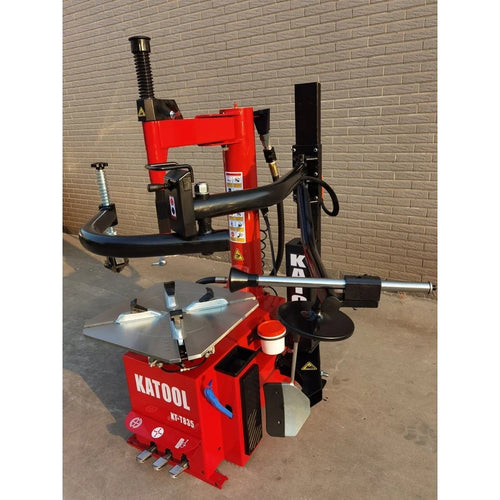
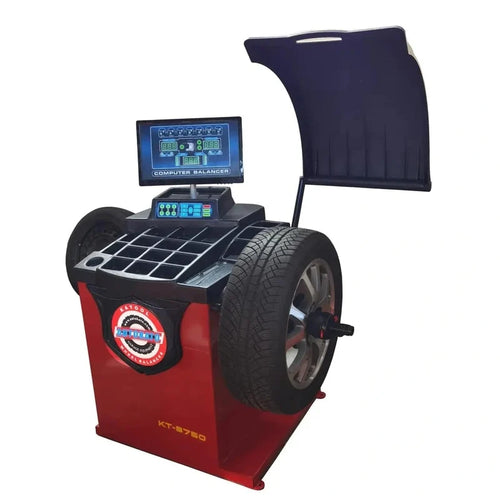
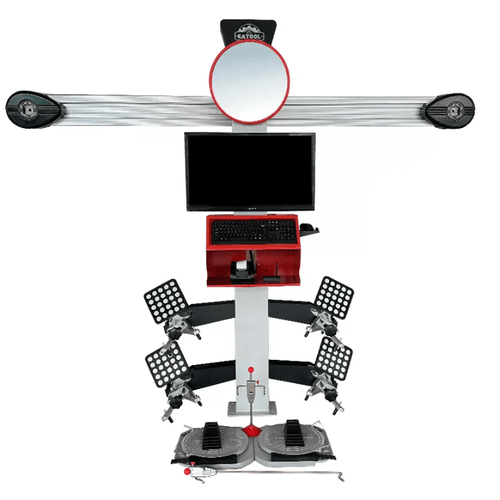
The practical levers are billed hours and comebacks: a lift in every busy bay, a tire changer and balancer that do not stall the line, an alignment rack that is actually used, organized tools, and equipment that is sized for the work. Forgeline sells that equipment, which is why a labor rate guide belongs next to the car lift garage fit calculator, the tire changer buying guide and the alignment machine guide.
- Car lifts and 2 post car lifts for repair bays
- Tire changers, wheel balancers and tire machine combos
- Wheel alignment machines and alignment lifts
- Brake lathes, A/C service equipment and auto body shop equipment
- Tool cabinets and the contact page if you want help matching equipment to a shop
Shop examples
One bay independent. One technician at $28 per hour, 25 percent burden, $4,000 in monthly overhead, 140 available hours and 70 percent efficiency. Loaded cost is $35. Billed hours are 98. Overhead is about $41 per billed hour. Full cost is about $76. A 25 percent profit target points to about $101 per hour.
Two or three bay repair shop. The $127 example above is a typical two technician planning case. Add a third technician only if there is enough work and enough bay space to keep efficiency from falling. A third tech with no extra lift often adds available hours that never get billed.
Tire shop. Cycle time matters as much as the posted rate. High efficiency on tire and alignment work can support a mid range door rate and a healthy ELR. See what a tire changer and balancer combo needs and what a tire changer costs.
Body shop. Body and paint rates are often posted separately from mechanical rates, and insurance work can cap what you collect. Run the calculator on the mechanical or frame side with that shop overhead, then watch ELR closely on insurance jobs.
Mobile mechanic. Lower overhead, fewer available hours, and travel time that has to live in the rate or in a trip fee. Use the same formula with realistic hours, not a 160 hour shop week.
A short checklist before you change the rate
- Run the door rate calculator with current wages, burden and overhead, and a conservative efficiency number.
- Compare the result with what similar shops in your market actually post, not with a national headline average alone.
- Compute last month effective labor rate and put it next to the posted rate.
- If ELR is far below the posted rate, fix discounting, billed hours and comebacks first.
- If the recommended rate is already above what you post, and the market can support it, plan a clean increase and review it again after the next wage or rent change.
Frequently asked questions
How much does a mechanic charge per hour?
What is the average auto shop labor rate?
How do you calculate a shop labor rate?
What is effective labor rate?
Why is the shop labor rate so much higher than technician pay?
Should an independent shop match the dealer labor rate?
Do mobile mechanics charge less per hour than a shop?
How often should a shop review its labor rate?
Recommended equipment