Nitrogen Tire Inflation: Is a Nitrogen Generator Worth It for a Tire Shop?
How nitrogen tire inflation works, nitrogen vs air facts, and what a tire shop should check before buying a nitrogen generator like the Katool KT-N80.

Quick answer: Nitrogen tire inflation fills tires with dry, high purity nitrogen instead of ordinary compressed air. Air is already about 78 percent nitrogen, so the difference is mostly purity and dryness, not a different gas. Many tire shops offer a nitrogen fill as an add on service, and a nitrogen generator lets a shop make its own supply on site instead of buying bottles.
This guide explains how nitrogen tire inflation works, what to expect from it, and what to check before buying a generator such as the Katool KT-N80.
What is nitrogen tire inflation?
Compressed shop air contains about 78 percent nitrogen, around 21 percent oxygen and some moisture. A nitrogen inflation system raises the nitrogen share by separating most of the oxygen and moisture out before the gas goes into the tire. The result is a drier fill with a higher nitrogen percentage, often quoted as a purity figure such as 95 percent or 99 percent.
Shops use two methods. Some buy nitrogen in cylinders. Others run a nitrogen generator, which makes nitrogen from compressed air and feeds it to a tire inflation hose.
Nitrogen vs air: what to expect
- Moisture. Nitrogen from a generator is dry. Shop air can carry moisture from the compressor tank.
- Pressure checks still matter. No fill gas replaces regular pressure checks. Drivers should still check their tires and follow the placard pressure for their vehicle.
- Mixing is fine. If a nitrogen filled tire is low and only air is available, topping it up with air is safe. It just lowers the nitrogen percentage.
- Customer value. Whether customers notice a benefit depends on the vehicle, the tires and how often pressure is checked. Shops that offer nitrogen usually sell it as a premium service.
How a tire nitrogen generator works
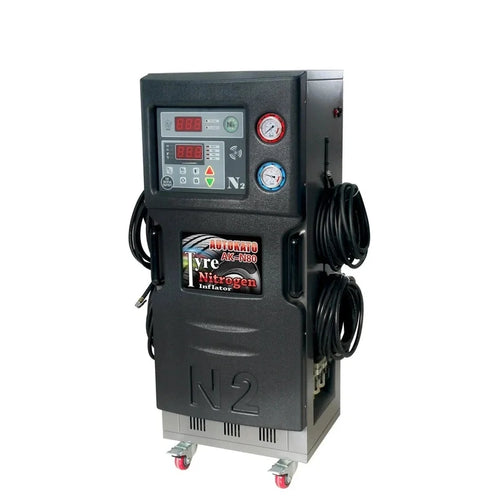
A tire nitrogen generator takes in compressed air, removes most of the oxygen and moisture, stores the nitrogen in a tank and delivers it through a hose to the tire. Better units pair this with a pressure controlled inflator, so you set the target pressure and the machine fills to it.
Katool KT-N80 tire nitrogen generator
The Katool KT-N80 is a tire nitrogen generator for cars and vans. Its listing gives these specifications:
- Adjustable nitrogen purity of 95 percent to 99.5 percent
- A 70 L tank
- Automatic inflation to a pre set pressure once the hose is connected to the tire
- Automatic vacuum and fill for tires inflated for the first time, to protect nitrogen purity inside the tire
- A special mode for managing zero pressure tires
- Pressure measurement range of 5 to 145 psi with 1 psi precision, on an LED display
- Output pressure below 8 bar (0.8 MPa)
- Chip control and a pressure sensor for monitoring
The listing also notes professional energy efficiency management. Confirm the electrical and compressed air requirements on the product page before you plan the install.
What to check before you buy a nitrogen generator
- Purity range. An adjustable purity range lets you trade speed against purity for different customers.
- Tank size. A larger tank holds more nitrogen so the machine keeps up with a busy bay.
- Vehicle range. The KT-N80 is listed for cars and vans, so confirm it matches the vehicles you service.
- Air and power. The generator needs a clean compressed air source and electrical power, so check both against your shop.
- Pressure accuracy. Look for automatic fill to a set pressure and a gauge range that covers the tires you fill.
- Service demand. Offer nitrogen only if your customers ask for it, as the revenue depends on that demand.
Nitrogen generator vs automatic tire inflator
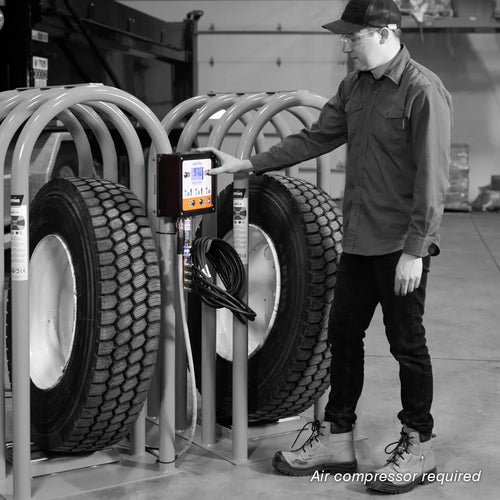
An automatic tire inflator fills a tire to a set pressure with shop air. It is a simpler tool and works for every customer. A nitrogen generator does the same job but fills with separated nitrogen. Many shops run both: an automatic inflator for everyday jobs and a nitrogen generator for customers who want it. Read our automatic tire inflator guide for how they work, and browse the tire inflators page, including the Martins Industries MW-60 automatic inflator.
Where nitrogen fits in a tire bay
Nitrogen is an add on to the tire service itself. If you are equipping or upgrading the bay, start with the machine that mounts and balances the tire: our tire changer buying guide and wheel balancer buying guide cover the options, and the tire changers page lists the machines. You can browse more equipment from the same maker on our Katool page.
Frequently Asked Questions
What is nitrogen tire inflation?
It is filling tires with dry, high purity nitrogen instead of ordinary compressed air. Air is already about 78 percent nitrogen, so the main differences are purity and dryness.
How does a tire nitrogen generator work?
It takes in compressed air, removes most of the oxygen and moisture, stores the nitrogen in a tank and delivers it to the tire through an inflation hose.
What purity does the Katool KT-N80 make?
The listing gives an adjustable nitrogen purity of 95 percent to 99.5 percent.
Can I add air to a nitrogen filled tire?
Yes. If only air is available, topping up is safe and simply lowers the nitrogen percentage a little. Keep checking the pressure either way.
Do nitrogen filled tires still need pressure checks?
Yes. Check tire pressure regularly and follow the pressure on the vehicle placard whatever you fill the tire with.
Is a nitrogen generator worth it for a tire shop?
It depends on customer demand. If your customers ask for nitrogen and will pay for it as a service, a generator removes the need to buy bottles. If not, an automatic tire inflator may be all you need.
Recommended equipment