Drill Press Speed Chart for Metal: RPM by Bit Size and Material
A drill press speed chart for metal with RPM by bit size for aluminum, brass, mild steel, cast iron, tool steel and stainless steel, the formula behind it and tips for feeds, coolant and tapping.

Key takeaways
- RPM = cutting speed (SFM) x 3.82 / drill diameter in inches.
- Bigger bits and harder metals need slower speeds.
- Typical HSS starting points: about 100 SFM for mild steel, 40 SFM for stainless.
- Use cutting fluid on steel and clear chips often.
- Variable speed drill presses make it easy to dial in the right RPM.
Running a drill bit at the right speed is the difference between clean holes and burned, dull bits. This drill press speed chart gives starting RPM by bit size for common metals, explains the formula behind it and shows how the speed ranges on Dake drill presses line up. Treat the numbers as starting points for high speed steel (HSS) twist drills and adjust for your bit, setup and coolant.
The drill press RPM formula
Every material has a recommended cutting speed in surface feet per minute (SFM). To turn that into spindle RPM, use: RPM = SFM x 3.82 / drill diameter in inches. A 1/2 inch bit in mild steel at about 100 SFM works out to about 760 RPM.
Drill press speed chart for metal (HSS drills)
Typical starting cutting speeds used for this chart: aluminum 250 SFM, brass 200, mild steel 100, cast iron 70, tool steel 50 and stainless steel 40. Values are rounded.
| Bit size (in.) | Aluminum | Brass | Mild steel | Cast iron | Tool steel | Stainless steel |
|---|---|---|---|---|---|---|
| 1/8 | 7,640 | 6,110 | 3,060 | 2,140 | 1,530 | 1,220 |
| 1/4 | 3,820 | 3,060 | 1,530 | 1,070 | 760 | 610 |
| 3/8 | 2,550 | 2,040 | 1,020 | 710 | 510 | 410 |
| 1/2 | 1,910 | 1,530 | 760 | 530 | 380 | 310 |
| 5/8 | 1,530 | 1,220 | 610 | 430 | 310 | 240 |
| 3/4 | 1,270 | 1,020 | 510 | 360 | 250 | 200 |
| 1 | 960 | 760 | 380 | 270 | 190 | 150 |
Cobalt and carbide drills can often run faster than HSS; follow the tool maker's data. Reduce speed if the bit squeals, chips turn blue or the cutting edges wear quickly.
Feed and pressure
Speed is only half the job. Use steady feed pressure that produces a continuous chip. Too little feed rubs and work hardens stainless steel; too much can break small bits. Peck drill deep holes to clear chips.
Cutting fluid
Use cutting fluid when drilling steel and stainless to cool the bit and improve finish. Cast iron is usually drilled dry. Aluminum benefits from a light lubricant to stop chips sticking.
Tapping on a drill press
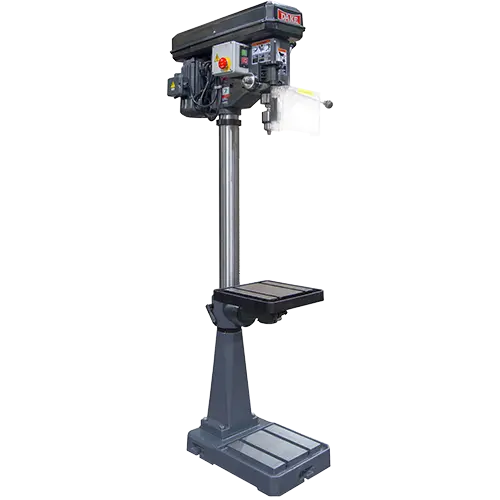
Tapping runs much slower than drilling. Drill presses with a forward and reverse switch let you run a tap in and back it out under power at low speed. Dake lists forward and reverse for tapping on its SB-25V floor drill press.
Dake drill press speed ranges
| Model | Speeds (Dake) | Drill capacity | Spindle taper |
|---|---|---|---|
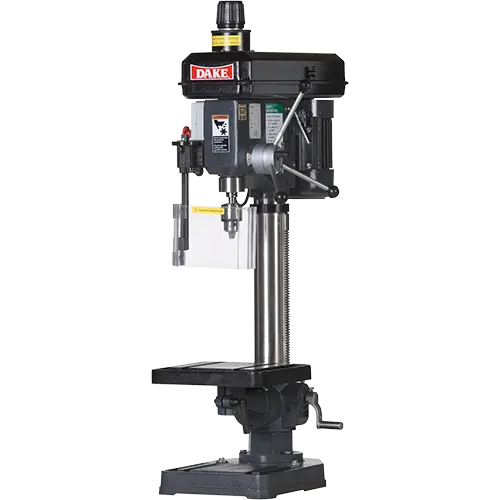
| Dake TB-16V bench | 545 to 4,000 RPM, mechanical variator | 5/8 in. | MT2 |
| Dake TB-16 bench | 240 to 3,400 RPM, 9 speeds | 5/8 in. | MT2 |
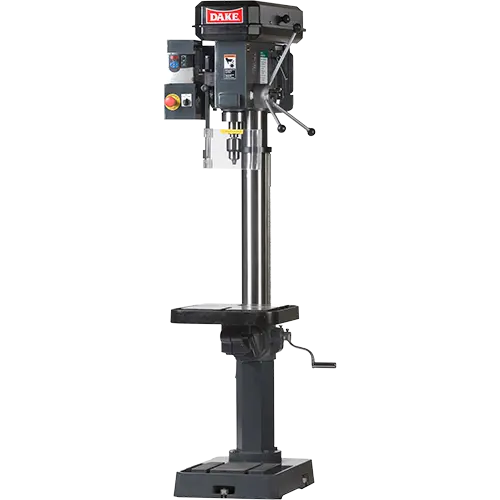
| Dake SB-16 floor | 240 to 3,400 RPM, 9 speeds | 5/8 in. | MT2 |
| Dake SB-25 floor | 270 to 2,000 RPM, 9 speeds | 1 in. | MT3 |
| Dake SB-25V floor | 46 to 3,550 RPM, variable | 1 in. | MT3 |
| Dake SB-32V floor | 46 to 3,473 RPM, variable | 1-1/4 in. | MT4 |
| Dake SB-250V auto feed | 68 to 1,380 RPM, variable | 1 in. | MT3 |
Speeds are from Dake product data and may change without notice. A low bottom speed matters for large bits and tapping in steel; a high top speed matters for small bits in aluminum.
Drill press speed checklist
- Find the cutting speed for the material and bit type.
- Calculate RPM with SFM x 3.82 / diameter.
- Start at the low end for hard or work hardening metals.
- Use steady feed and peck deep holes.
- Use cutting fluid on steel.
- Clamp the work in a drill press vise.
Products to consider
- Dake SB-25V: variable speed 46 to 3,550 RPM with forward and reverse.
- Dake SB-32V: 1-1/4 in. capacity and MT4 spindle.
- Dake SB-250V auto feed: power down feed for repeat holes.
- Dake TB-16V: variable speed bench model.
Read the drill press buying guide or shop all drill presses.
Frequently asked questions
What speed should a drill press run for steel?
How do I calculate drill press RPM?
What speed should I use to drill stainless steel?
Should larger drill bits run slower?
Do I need a variable speed drill press?
Can I tap on a drill press?
What is the speed range of the Dake SB-25V?
Recommended equipment